skip to main |
skip to sidebar
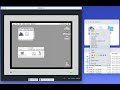
What a different feeling when I saw the raw Google! It was a coincidence when I surfed Internet Archive
This blog was just used to keep record for the first Google website!
Moral relativism is the idea that moral principles have no objective standard, so states its dictionary definition. In its extreme, the view that there are no hard and fast rules on what is right and wrong, on which values are set and should be fought for. It is in contrast to absolutism, that there is one truth.
Currently relativism was being under attack in the British general election campaign. Under it, said Michael Howard, leader of the Conservative Party, traditional British values are "being trashed" as "the victims have become the agressors and the agressors have become the victims". It seems that Michael Howard is absolute not a relativism fan at all. How about British people?
[source: BBC News]
I really could not find any reasons to refuse myself to go for a PowerBook for my next laptop. 200+ features in the new update to the OS X was unveiled to me. It really shocked to me. More than that, it enhanced my determinations to touch the fresh Apple and feel the real art in the science world.
 It has been a long wish for me to have a Powerbook! That is so cool to operation on that machine and write your ideas on that beautiful machine. It seems like flying freely in the sky. Apple is a real art piece in the computer world!
All of my computer are all coming from Windows family. Windows is simple and efficient actually to our life and work. That is enough at all to our routine organizing and processing tasks, which is the real part of computing. However, Apple is more than that. It is not just limited on the computing, more about arts. Not any computer could do it. Apple bring us the enjoyments in front of cold machines.
I want to change. Only Apple could give me this opportunity. With the release of news that Tiger will turn up soon, many new features, including Spotlight, Dashboard, Automator, etc, definitely will bring a new revolution to the concepts of computing.
What kind of information should be accessed by the public and what is not? I believe that it should depend on the countries. Different countries have various beliefs for this problem, also have different mechanisms to control the access right. Every country has her own privacy. That means some information must be protected by the government, not be accessed by the public.
This news reported that China still retains a tight control on the public access to some sensitive information sources, such as some information describing Tiananmen Square in 1989, Dalai Lama, and even Falun Gong, as well as some world famous media, for example, BBC.
In addition, the news said the filtering technologies in China is pervasive, sophisticated, effective, and dynamic in nature, changing along a variety of axes over time.
As a child when in China, it was true that I was always eager to listen to BBC radio about the world news and keen to find out the true side of the news. I still remembered during those years I did not know whether the news from BBC is subjective or objective though I know the principles of the news reporting is truth comes first always because I occasionally found out that some news from BBC radio was different from what I heard in our radio. I felt very strange about that because I did not know which source I should trust. That attracted me to listen to BBC more. What's more, it is not very easily to receive the signals of BBC, which covered a secret mask on BBC radio for me. Later, with the involvement of Internet in the exchange and communication of information, I could easily find the answers on the WWW. With the time being, everything seemed normal to me.
From the view of the technologies, information should be independent of any media and should be available to collect and process at any time. In my point of view, what we should do is to make sure the information sources themselve right. As for how to control them, it is an artificial and external factor. In the individual view, It is not appropriate to decide whether it is right to open the access to all the information to the public. Seriously governments should have their respective rights to cover a limited amount of information related to the security, which was decided by the country's constitution. We could not measure this issue with a standard accepted by most of the countries in the world.
Can machine really understand what you really want to express? Currently a computer program developed at the University of Missouri could grade essay and offer students writing advices. This program cost 6 years, called Qualrus, and has been testing on the pupils. It works by scanning text for keywords, phrases and language patterns. What students need to do is to load the paper into the program via the Web, like the common web-based submitting systems, and then they will get the instant feedback.
This news described this program in details. I believe that Qualrus is not the first such program, as I know, some colleges in the State use e-rater system to give students scores. I doubt the precision of such program. As for the choice questions in the exams, such as GRE, GMAT, LSAT, we could still discuss the future of such programs further. However, as for the essay student express their personal ideas and feelings with a paper, how does a cold and electrical machine differ between unadulterated and adulterated sentences, understand affecting feeling expressed within each line, and infer a conclusion by reasoning the strong logics in the arguments, etc.? If Qualrus really could give marks based on those stuffs, then he should be able to think itself as we do.... I don't know...
But Qualrus is a truly brave breakthrough in driving computer to think!
This news reported that ontology, far frome being an ideal high-order tool, is a 300-year-old hack, now nearing the end of his useful life. I really do not believe this view.
Ontologies, as the backbone of most of the existing and potential application, is becoming more and more important. They are mainly used to organize the fractal knowledge in our routine life by providing a structure "tree" whose branches and nodes are the knowledge points. What we have is a vast and increasing number of the information. What we do not have is the well-organized knowledge distilled from the information sources, which is the real internal energy to drive the application running. Ontology provides us an infrastructure for this internal energy. The applications built on the top of it will not only run intelligently but also collaborate seamlessly.
I don't think ontology is overrated. The truth is ontology is rated and needed badly!